

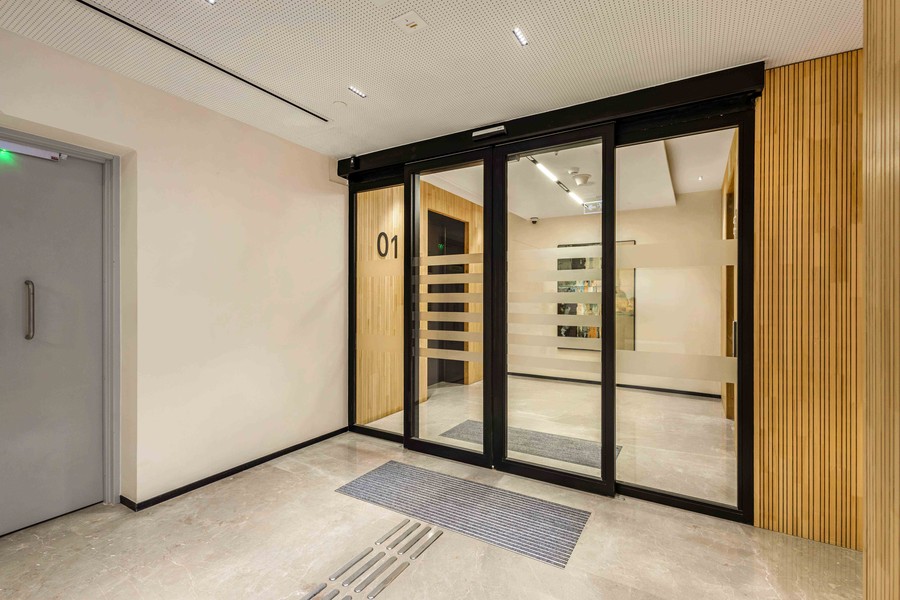
In modern corporate and commercial construction, fire-rated sliding glass doors are gaining popularity. They assist in maintaining elegance and light while dividing spaces and ensuring safety. However, how can you tell whether or not your sliding glass doors blocking sound are genuinely fire-rated and compliant?
You will gain insight into evaluating your sliding glass doors for compliance with fire safety aspects and what features stand out for scope selection in compliance evaluation.
Check For Certification Labels
The most straightforward method of determining whether a sliding glass door is fire-rated is to look for certification labels or markings that exclude standards that could be easily discriminatory. These marks or labels are often attached to the frame or glass of the door and signify meeting fire-resistance testing criteria.
They will guarantee to include, but not limited to:
- Duration for which the Fire rating is given
- Name of the Manufacturer
- Model Number
- Certifying Agency
In the absence of such a label, the door seems not to be compliant or certified.
Confirm Fire Rating Duration
Different areas require different degrees of fire resistance. Fire-rated sliding doors are tested for how long they can endure fire, measured in minutes. The most common ones are:
• 30 minutes (FD30)
Appropriate for general office partitions.
• 60 minutes (FD60)
Commonly asked for in corridors or close to the emergency exit.
• 90 or 120 minutes
Commonly employed in high-risk areas or elevators in buildings with high occupancy.
Always check the document or the sticker to confirm the fire rating duration and that it meets local building code regulations.
Inspect the Entire Door Assembly
A fire-rated door is more than just the glass panel. It is the whole assembly that is tested and certified as one unit. That includes:
- The glass (usually multi-layered fire-resistant glazing)
- The frame (metal or special fire-rated timber)
- The sliding track or guide rail system
- Seals and gaskets that inhibit the movement of smoke or heat
Make sure all these parts are integrated into a tested and listed system rather than individual components.
Look for Self-Closing or Automatic Systems
Most building codes state that fire-rated doors, including sliding doors, have to close by themselves:
- Heat-triggered devices
- Magnetic hold-open systems firm to fire alarms
- Gravity-fed closing devices
Test or inspect whether the sliding door involves an automatic closing feature, and that it everything reliably without manual intervention.
Review Documentation and Test Reports
Ask the supplier or installer for the fire test reports and manufacturer’s confirmation. A genuine fire-rated system will come with official proof showing agreement with fire testing under regulated conditions.
Always cross-reference:
- The experiment agency (must be an acknowledged body)
- The fire resistance grade
- The tested door size and configuration (must couple with your actual establishment)
Conclusion
Fire-rated sliding glass doors offer both style and security—but only when they’re properly certified and properly installed. By checking the confirmation labels, fire rating event, door assembly, and advocating documentation, you can positively ensure your sliding glass doors meet the necessary fire security standards.
When in doubt, ask a fire safety engineer or building code official to verify compliance. It’s not about meeting regulations—it’s about preserving people and property.